Karate
Karate
Karate: [kaɽati]), also karate-do, is a martial art developed in the Ryukyu Kingdom. It developed from the indigenous Ryukyuan martial arts, "hand"; tī in Okinawan) under the influence of Chinese martial arts.[1][2] While modern karate is primarily a striking art that uses punches and kicks, traditional karate training also employs throwing and joint locking techniques.[3] A karate practitioner is called a karate-ka.
Beginning in the 1300s, early Chinese martial artists brought their techniques to Okinawa. Despite the Ryukyu Kingdom being turned into a puppet state by Japanese samurai in 1609, after the Invasion of Ryukyu, its cultural ties to China remained strong.[4] Since Ryukyuans were banned from carrying swords under samurai rule, groups of young aristocrats created unarmed combat methods as a form of resistance, combining Chinese and local styles of martial arts.[4] Training emphasized self-discipline.[4] This blend of martial arts became known as kara-te 唐手, which translates to "Chinese hand." Initially, there were no uniforms, colored belts, ranking systems, or standardized styles.[4] Many elements essential to modern karate were actually incorporated a century ago.[4]
The Ryukyu Kingdom had been conquered by the Japanese Satsuma Domain and had become its vassal state since 1609, but was formally annexed to the Empire of Japan in 1879 as Okinawa Prefecture. The Ryukyuan samurai (Okinawan: samurē) who had been the bearers of karate lost their privileged position, and with it, karate was in danger of losing transmission. However, karate gradually regained popularity after 1905, when it began to be taught in schools in Okinawa. During the Taishō era (1912–1926), karate was introduced to mainland Japan by Gichin Funakoshi and Motobu Chōki. The ultranationalistic sentiment of the 1930s affected every aspect of Japanese culture.[4] To make the imported martial art more relatable, Funakoshi incorporated elements from judo, such as the training uniforms, colored belts, and ranking systems.[4] Karate's popularity was initially sluggish with little exposition but when a magazine reported a story about Motobu defeating a foreign boxer in Kyoto, karate rapidly became well known throughout Japan.[5]
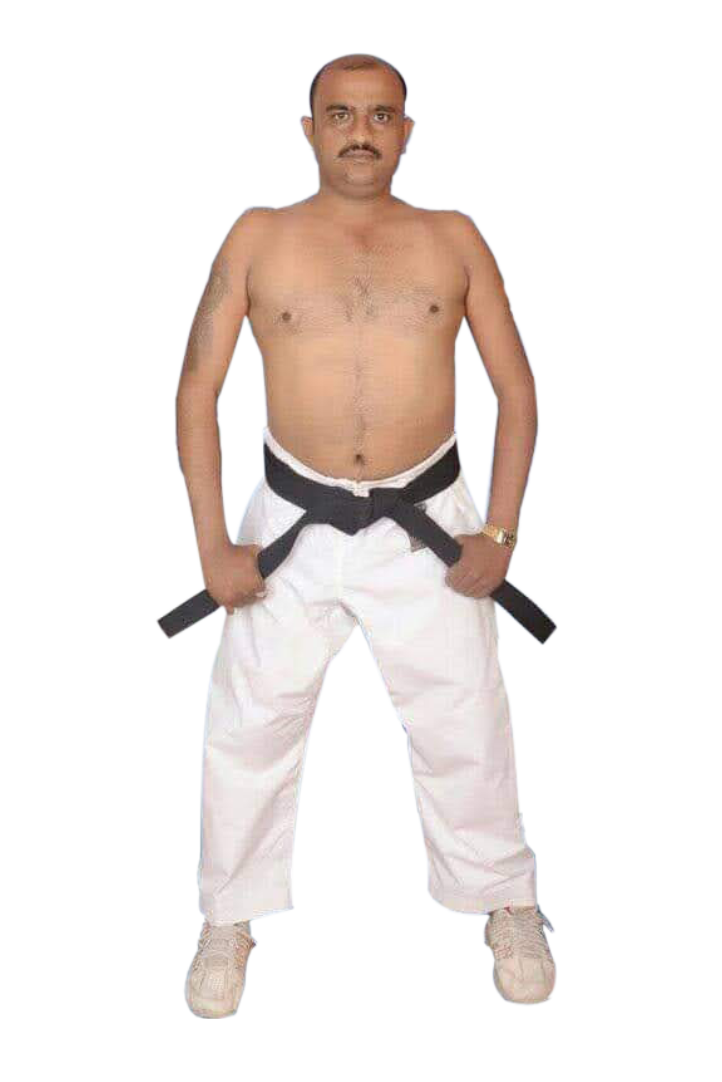
Master Mr. Ananta Sonule