
Yongmudo
Yongmudo
Yongmudo, Yongmoodo or Yong Moo Do (Korean: 용무도) is a modern hybrid Korean martial art which combines different techniques from taekwondo, hapkido, judo, and ssireum as well as boxing and wrestling.[1]
The Self-Defense Yongmudo Club was formed in 1974 and the World Yongmudo Federation was established in 1999.[3]
Norman Link believes that yongmudo "was developed in part because as taekwondo grew into a dazzling martial sport, it lost most of the other aspects, like self-defense."[4]
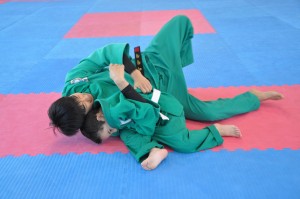
The term Yongmoodo (literally translated as "Dragon Martial Way") comes from the word Hankido which was developed in Korea in 1976. Then the name changed to Kukmodo and then changed to Yongmoodo. Yongmoodo consists of three syllables: 1. YONG means dragon. 2. MU or MOO means martial which refers to fighting or battles and fights including defense and strategic, physical, mental, and physiology aspects. 3. DO means a way of training and a way of life and contains philosophy and the ability to learn from nature, live and fight, against nature.[5]
Yongmudo uses various dynamic techniques from martial arts such as Taekwondo, Judo, and Ssirum and is based on physical, psychological, spiritual, and mental training with contemporary scientific knowledge. Yongmudo was developed with an emphasis on education, training and martial arts philosophy. It is a practical self-defense training system, combining most practical techniques from several traditional Korean martial arts as well as other related disciplines. The primary techniques of Yongmoodo including offensive and defensive techniques are throwing, grappling and ground techniques from Judo, slamming and holding down from Wrestling, kicking, striking, thrusting, punching and blocking from Taekwondo, Kumdo and Kerkki, and joint locking from Hapkido.[2]